Windows 7 Sins

Open or Free?

When we call software “free,” we mean that it respects the users' essential freedoms: the freedom to run it, to study and change it, and to redistribute copies with or without changes. This is a matter of freedom, not price, so think of “free speech,” not “free beer.” These freedoms are vitally important. They ... . They become even more important as our culture and life activities are increasingly digitized. In a world of digital sounds, images, and words, free software becomes increasingly essential for freedom in general. But most of these users have never heard of the ethical reasons for which we developed this system and built the free software community, ... - Continue reading.

RSS

Twitter

Forum RSS

Recent Forum Posts

Network booting with boot.fedoraproject.org

March 7th, 2010 • Category: fedora

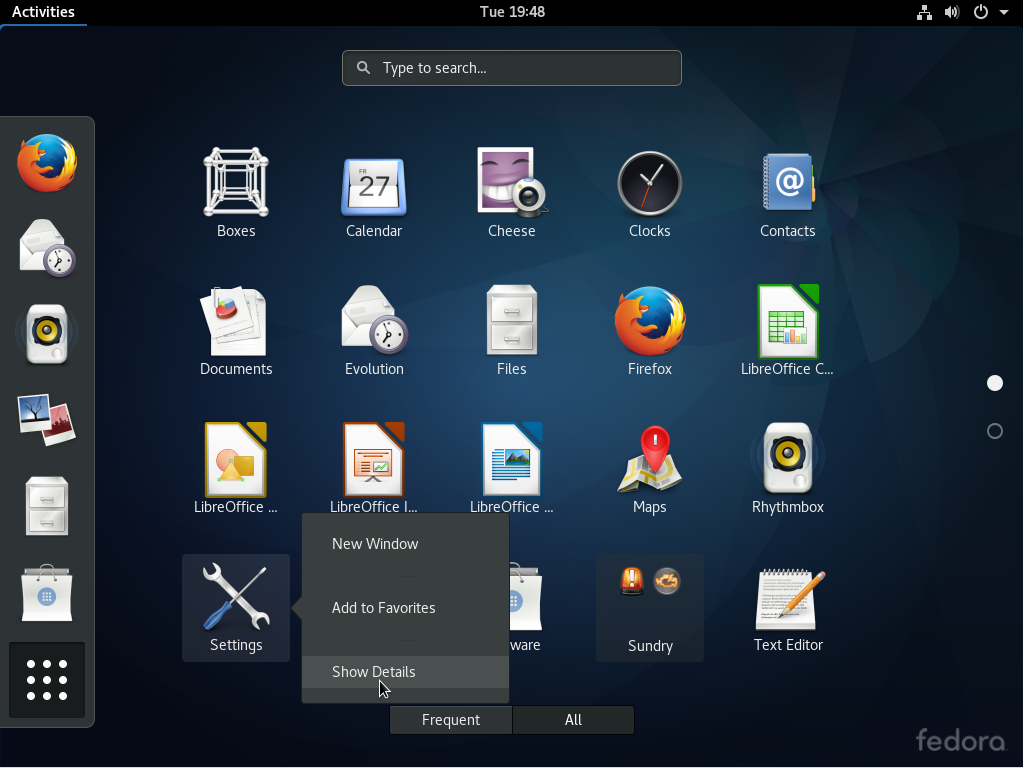
Fedora  Boot.fedoraproject.org (BFO) is Fedora’s implementation of boot.kernel.org, a project designed to give computers the capability to boot from a network. The actual program that provides this capability is gPXE, which evolved from the Etherboot project. Fedora’s twist on gPXE allows you to network-boot current, past and future (Rawhide) releases of Fedora. All you need to do is download a small iso image (the current BFO weighs in at just 626 KB), transfer it to a media, boot of that media and perform any number of tasks that you would normally perform with a full CD or DVD iso image. The next few shots will take you through the features of BFO.

Federal Intellectual Property Enforcement Gears Up

March 5th, 2010 • Category: privacy and licensing

Electronic Frontier FoundationThe Obama Administration has been slowly ramping up its attention to intellectual property issues. Over the past few months, we’ve seen an IP “summit” at the White House. We’ve seen the successful nomination of a new cabinet-level “IP Czar” position. We’ve seen the announcement of a new DOJ task force for IP issues. What does it all portend?

Unfortunately, many signs suggest that the administration is paying far more attention to the interests of the entertainment industry than to the public good. At the same time, there are a few positive efforts and indications, so we’re holding out hope that things could improve.

BSD Magazine: March 2010

March 5th, 2010 • Category: bsd news

BSDmag The March 2010 issue of BSD Magazine, a free, online magazine for the BSD community, is now available for download. The theme for this edition is “BSD as a Desktop.” The following are some of the articles you’ll find inside:

  • Build Your Own FreeBSD Update Server – Experienced users or administrators responsible for several machines or environments, know the difficult demands and challenges of maintaining such an infrastructure. The article outlines the steps involved in creating an internal FreeBSD Update Server.
  • Using OpenBSD and PF as a Virtual Firewall for Windows – The Windows firewall, by default, has many open ports to the local network, like the file and print sharing service ports, which are the source of many security holes. How to protect a Windows host with a basic configuration of an OpenBSD virtual machine with PF as a NAT router and firewall?

Search your Android phone with written gestures

March 3rd, 2010 • Category: android

AndroidAs mobile phones become increasingly powerful and can store more data, we’ve introduced new methods of search to get you to your content faster, such as search suggestions or search by voice. But sometimes, typing to get to the right search suggestion takes too long, and you may be in a quiet environment where speaking a query is inappropriate. Today we’re pleased to announce Gesture Search, a new Google Labs application for Android-powered devices running Android 2.0 or above in the US. Gesture Search lets you quickly find a contact, an installed application, a bookmark or a music track from hundreds or thousands of items, by simply drawing alphabet gestures on the touch screen.

Unintended Consequences: Twelve Years Under the DMCA

March 3rd, 2010 • Category: privacy and licensing

Electronic Frontier FoundationTwelve years after the passage of the controversial Digital Millennium Copyright Act (DMCA), the law continues to stymie fair use, free speech, scientific research, and legitimate competition. A new report from the Electronic Frontier Foundation (EFF) collects reported examples of abuses of the DMCA and the ongoing harm the law continues to inflict on consumers, scientists, and small businesses.

The U.S. Copyright Office is currently mulling proposed exemptions to the DMCA’s ban on “circumventing” digital rights management (DRM) and “other technical protection measures” used to restrict access to copyrighted works. The Copyright Office is empowered to grant exemptions to the law every three years to mitigate the harms that DRM otherwise would impose on legitimate, non-infringing uses of copyrighted materials.

Software sniffs out criminals by the shape of their nose

March 2nd, 2010 • Category: privacy and licensing, security

Forget iris and fingerprint scans — scanning noses could be a quicker and easier way to verify a person’s identity, according to scientists at the University of Bath.

With worries about illegal immigration and identity theft, authorities are increasingly looking to using an individual’s physical characteristics, known as biometrics, to confirm their identity.

File-Sharing Software Potential Threat to Health Privacy

March 1st, 2010 • Category: privacy and licensing, security

The personal health and financial information stored in thousands of North American home computers may be vulnerable to theft through file-sharing software, according to a research study published online in the Journal of the American Medical Informatics Association.

Healthcare professionals who take patient information home to personal computers containing peer-to-peer file-sharing software are jeopardizing patient confidentiality, note the authors of the study.

Vine Linux

March 1st, 2010 • Category: Desktop & Server

Vine LinuxVine Linux is a Japanese, RPM-based, multi-purpose distribution. It is developed and maintained by Vinecaves, and it’s based on an earlier version of Fedora. It is one of those distributions that excludes non-free (proprietary) applications from its default installation. Unlike similar distributions, however, it has developed a smart method to make installing non-free applications very easy.

Vine Linux 5.1 review

March 1st, 2010 • Category: reviews, vine

Vine Linux Vine Linux is a Japanese, RPM-based, multi-purpose distribution. It is developed and maintained by Vinecaves, and it’s based on an earlier version of Fedora. It is one of those distributions that excludes non-free (proprietary) applications from its default installation. Unlike similar distributions, however, it has developed a smart method to make installing non-free applications very easy. This is a review of version 5.1, which was released last week. This also marks the first listing of Vine Linux on this site.

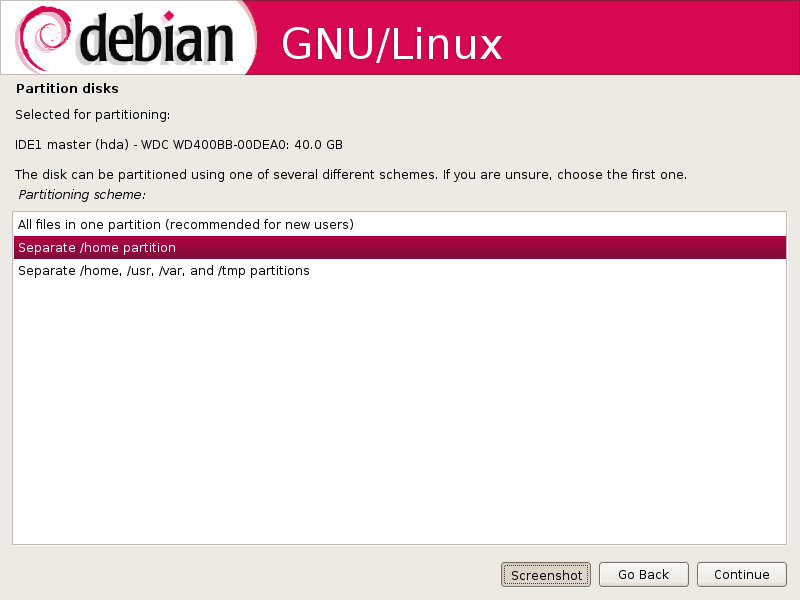
Installation – Vine Linux uses the Anaconda installation program. The installation process is very similar to that of older versions of Fedora. There is support for setting up RAID and LVM. LVM is the default disk partitioning scheme, with ext3 as the default journaling file system. Actually, ext3 is the only journaling file system supported. GRUB Legacy (version 0.97) is the only bootloader option.

Printer configuration and management on PC-BSD 8

February 27th, 2010 • Category: Tutorials/Tips, pc-bsd

PC-BSDPC-BSD is a desktop-centric distribution based on FreeBSD. The latest stable version, released just this week, is PC-BSD 8. On most Linux, desktop distributions, a connected printer is automatically configured. On PC-BSD 8, however, getting a printer to work requires manual configuration. To simplify that task, a number of printer management utilities are available. You may access the main printer management interface from System Settings > Printer Configuration, or just launch a browser and type http://localhost:631 into the address bar to access the CUPS Web (management) Interface. If you have an HP printer, the HP Device Manager is also available, accessible from Applications > Utilities > HP Device Manager.

You may also find the following articles useful: PC-BSD 8 review and PC-BSD 8 installation guide.

New Security Threat Against ‘Smart Phone’ Users

February 27th, 2010 • Category: mobile news, security

Computer scientists at Rutgers University have shown how a familiar type of personal computer security threat can now attack new generations of smart mobile phones, with the potential to cause more serious consequences.

The researchers, who are presenting their findings at a mobile computing workshop this week in Maryland, demonstrated how such a software attack could cause a smart phone to eavesdrop on a meeting, track its owner’s travels, or rapidly drain its battery to render the phone useless. These actions could happen without the owner being aware of what happened or what caused them.

Malicious Software: Hiding the Honeypots

February 27th, 2010 • Category: security

Armies of networked computers that have been compromised by malicious software are commonly known as Botnets. Such Botnets are usually used to carry out fraudulent and criminal activity on the Internet. Now, writing in the International Journal of Information and Computer Security, US computer scientists reveal that the honeypot trap designed to protect computers from Botnets are now vulnerable to attack because of advances in Botnet malware.

In the 1990s and early 2000s, viruses and worms were the main problems facing computer security experts, with the likes of Melissa, Love Letter, W32/Sircam, MyDoom, Netsky and Bagle familiar to anyone reading the computer press during that period.

Qt + Box2D is easy!

February 26th, 2010 • Category: Tutorials/Tips

Qt SoftwareBox2D is an Open Source rigid body 2D physics engine for C++. It’s currently (2.0.1) released under the MIT license, which is quite permissive. Box2D is used by, among other things, Gluon (http://gluon.tuxfamily.org/), which is a game library from KDE in-the-making.

Integrating Box2D into your Qt application is quite easy, and this blog shows you how to get started. First of all:

  • Step 1: Download Box2D from Google Code: http://code.google.com/p/box2d/
  • Step 2: Build it (I had to insert a few #include <cstring> to get it to build)
  • Step 3: Build and try the test bed application: Box2D/Examples/TestBed/
  • Step 4: Read the manual: http://www.box2d.org/manual.html
  • Step 5: Continue reading this blog to hook up the two frameworks…

PC-BSD 8 review

February 26th, 2010 • Category: pc-bsd, reviews

PC-BSDPC-BSD is a FreeBSD-based desktop distribution, with KDE as the default desktop environment. It is the most actively developed of the BSD, desktop distributions listed on this site. This review is of PC-BSD 8, the latest stable edition, which was released earlier this week.

Installation – PC-BSD 8 sports a redesigned graphical installation program. It is one of the better graphical installation programs available on any distribution – Linux or BSD. It features a very clean and intuitive interface. Aside from providing a means to install a complete desktop system, the installer also allows for the installation of a FreeBSD server.

Copyright © • LinuxBSDos.com

Powered by Olark