Posts Tagged ‘software’
Although OpenOffice.org is a competent productivity suite, you can add some nifty features to it using extensions. There are hundreds of nifty extensions available in the official extension repository. Some of them add a feature or two, while others take OpenOffice.org to a whole new level. The AuthorSupportTool (AST) extension belongs to the latter category. AST not just adds some random features to OpenOffice.org Writer, it dramatically enhances the word processor’s functionality, turning it into a powerful tool for working on research papers and complex documents.
Cloud computing is all the rage these days. But while the idea of using your browser to access your applications and documents sounds like a great idea on paper, in practice there are all kinds of reasons to stick to your desktop software. Take OpenOffice.org, for example. None of the available Web-based word processors can compete with Writer when it comes to features and flexibility. But even if you don’t subscribe to the idea of ditching OpenOffice.org in favor of a Web-based productivity suite like Google Docs or Zoho Docs, you can still put some useful Web-based services to some practical use.
Office applications like OpenOffice.org can bring out the worst in people. The same people who wouldn’t dream of driving a car without a few lessons will start pounding away in a word processor as though it were a typewriter, ignoring basic features like styles and templates. In the end, they may produce the documents they want, but only with far more effort than is necessary. They might as well be pushing a car instead of turning the ignition key.
Nothing stops you if you really want to format manually, any more than anything prevents you from using the soles of your shoes to slow down a car instead of the brake. OpenOffice.org does nothing to stop you from indenting each new paragraph in Writer or setting each number format in a Calc cell on its own. For small, unusual documents, manual formatting may even be quicker.
The latest version of Qt for the Maemo platform has been released. See the official announcement page. Note that since Moblin and Maemo have been merged to form a single platform, this could be the last release of Qt for Maemo. Don’t quote me on this, but that’s what I think. Watch the video demo of some of the new features below.
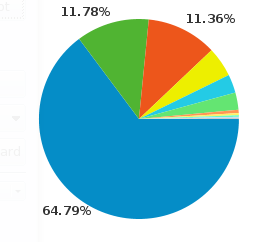
Remember when Internet Explorer ruled the Web, to the tune of about 98% of the browser market share? Those were happy days for Internet Explorer. Until Firefox rose from the ashes of Netscape. Internet Explorer’s market share has been sliding ever since, and I think it got worse when Safari and then Google’s Chrome joined the browser market.
A new report shows that that slide has put Internet Explorer’s market share at just under 60%. That’s still a majority share, but nowhere near the 98% it used to be. The report by AT Internet Institute, a Web analytics and online intelligence outfit based in Mérignac France, shows that from June to December 2009, Internet Explorer lost about 3% of its market share in Europe. Within the same time period, Firefox gained 1.1%, Google’s Chrome 2%, and Safari just about 1%. Not major gains by the way, but they are not exactly standing still. The only well known browser that did not record any gains in market share was Opera. At 2.3%, its market share’s just .a tad higher than the 2.2% it recorded in the same time frame a year earlier.
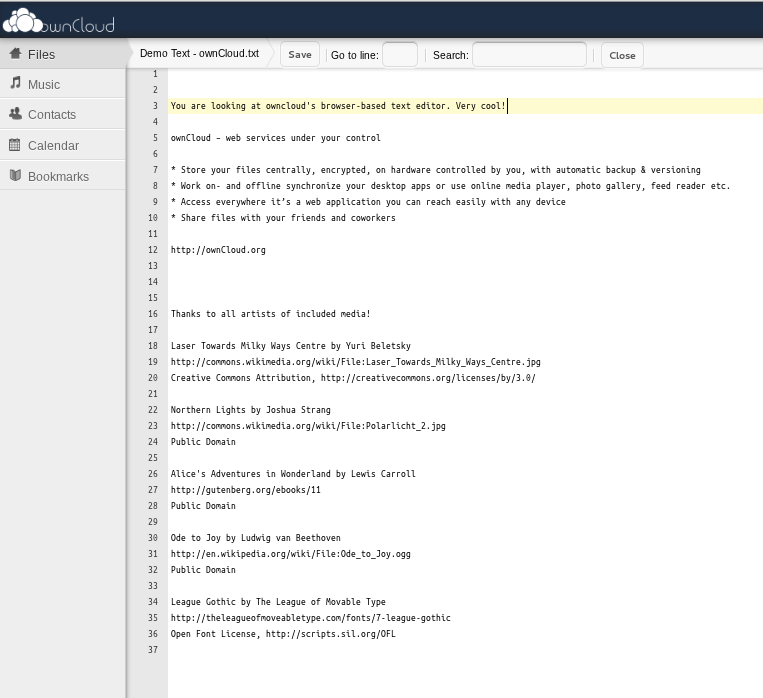
Day 2 of Camp KDE kicked off with a bang when Frank Karlitschek announced the start of a significant new KDE project. The ownCloud initiative will complement the Social Desktop and Get Hot New Stuff efforts which are already dealing with social and collaborative data. Like those, the ownCloud initiative strives to combine the rich desktop interfaces made possible by the Qt and KDE libraries with the large amount of social information and data users are putting online.
Traditionally, a user has been limited to the data on the device he/she is using. Recently this has changed with the introduction of a variety of online services such as Last.fm, Pandora, Facebook and flickr – a significant portion of data is now in the cloud rather than local hosted. ownCloud will allow users more freedom in choosing and changing services, even in running their own hosted services.
People are voting for Google to offer HTML5/Ogg video support on YouTube, in Google’s own product ideas voting space.
This piece of Ogg activism is getting some traffic on identi.ca and Twitter right now. If you haven’t already, you should jump in.
YouTube is, obviously, the largest source of videos in the world by far, so keeping pressure on Google to support web standards and free formats (over proprietary formats like Flash) is really important.
TinyOgg is a new Web application that makes it possible to “watch and listen to Flash-based videos without the need to Flash technology.” And it does this by first converting any flash video file to an Ogg (Theora) format. Ogg Theora is a “free and open video compression format from the Xiph.org Foundation”.
Introduction
Here’s the next instalment of the graphics performance blog series. We’ll begin by looking at some background about how OpenGL and QPainter work. We’ll then dive into how the two are married together in OpenGL 2 Paint Engine and finish off with some advice about how to get the best out of the engine. Enjoy!
Why OpenGL?
Before I dive into the OpenGL paint engine, I want to make sure we all understand the motivation for the OpenGL 2.0 paint engine. I’ve talked about this before in my article about hardware acceleration, but we still frequently get questions like “Why not implement a Direct2D paint engine?”.
Qt software has released the first batch of Qt solutions licensed under the GNU Lesser General Public License (LGPL). According to the release announcement, this first batch will be followed in the coming weeks by the release of the full set of Qt components. The components that made it in this first batch are:
One of the advantages of using free and open source operating systems like Linux and BSD distros is that users have a wide range of applications to choose from. And we are not just talking about half-baked applications, but high quality software that rivals and in many cases are better than their proprietary equivalents. That holds true for the Office Suite category of applications (including standalone word processing and spreadsheet applications).
Linux and BSD desktop distributions have several PDF readers in their repository that any user may download and use. PDF, an acronym for Portable Document Format, is a popular format (designed by Adobe) to publish formatted text and documents. The most popular reader is, of course, Adobe Acrobat Reader. However, it is a proprietary software.
Nokia announced today the availability of version 4.5 of the Qt cross-platform application and UI framework. It also introduced Qt Creator, a new lightweight cross-platform Integrated Development Environment (IDE), Qt 4.5 and Qt Creator combined comprises the Qt SDK, an easy to install package that will let application developers to create applications quickly and easily.
The Elisa team has announced the release of Elisa Media Center 0.5.22. Elisa Media Center is a free and open source cross-platform media center application, developed by Fluendo S.A. of Spain. Dubbed “Where Is My Mind?”, this release comes with the usual set of bug fixes, and a few new features.